Take-Homes from Uganda

Visiting Alongside Africa

As my last week with CFHI in Uganda is wrapping up, I’ve been able to reflect on my time here and think a lot about what I should take home from this month. Before embarking on this venture, I had hoped to gain insight into how medicine differs in Uganda from the United States and other countries I’ve visited, such as Peru and India. I’d hoped to understand what part of medicine was so different that the average life expectancy of Ugandans is 59 years, while the average Indian lives to 68 and Peruvian to 75. I’d also wondered whether I’d feel an obligation to make more of a presence internationally.

I’ve come to find out that medicine itself isn’t practiced very different at all. I’ve seen a myriad of tropical diseases, such as elephantiasis, typhoid, and tuberculosis, as well as a higher prevalence of HIV and its complications. I was so impressed that I didn’t see a single smoker during my time in Uganda, and no patients with COPD. Targeting HIV is largely combated the same way as it is in the States: patient education, medication compliance, and social support. The biggest difference I’ve observed in medical care, however, is a lack of access to subspecialists and equipment due to insufficient funds by patients and hospitals. Undernutrition is additionally rampant and contributes to many patients’ diminishing health status, especially in the pediatric population. Unfortunately, poverty is the limiting factor for health in many Ugandans. And foreign aid hasn’t helped the problem.

I’m not going to pretend to be an economics expert, but as I’ve read in Dambisa Moyo’s Dead Aid so far, government aid from the United States, Europe, and Japan has had detrimental results on the African continent, as government aid makes it easier, and more enticing, to corrupt government. Many sub-Saharan and central African governments remain some of the most corrupt governments in the world according to the Corruption Perception Index, and government aid hasn’t helped this problem. It’s also had a negative impact on the development of African nations. Moyo gave a specific example of how an African manufacturer of mosquito nets was put out of business due to the generous donation of 100,000 mosquito nets from Americans. She also states that the average African is actually less well off financially relative to the rest of the world today than in the 1970s. Despite exceptional financial aid from developed nations, poverty hasn’t improved in much of Africa. Blindly giving money and donations to African nations needs to stop.

Alongside Africa kids working on the garden

However, I’m not suggesting that we need to stop helping individuals who are in need. What I believe must happen is a more intelligent approach to giving assistance to African nations. My next read is Smart Aid for African Development by Richard Joseph and Alexandra Gillies so that I can have a better idea of how to do this. This week, I visited “Alongside Africa Uganda,” an NGO dedicated to helping street children of Kabale attend school, cultivate marketable skills, and stay off drugs and alcohol. Alongside Africa provides a place for children to stay during the day and get healthy meals. They also sponsor some children to attend boarding school. I was able speak with George, the director of operations, and spend some time with the kids. It was a rainy day, so we watched a movie after working on the garden. The kids were all so well behaved, a refreshing impression given that I’ve seen quite a few street kids sniffing glue and begging for money. I love their slogan: Opportunities, not Aid.

Take-homes from Uganda:

  • Foreign aid (especially loans and grants) has been detrimental to the development of many African nations.
  • There is a way to give smarter aid to Africa (with a discussion to be continued).
  • Medicine is practiced very similarly in Uganda as it is in the United States, with some notable differences being the minimal number of smokers, a much higher prevalence of HIV, and unique tropical diseases such as malaria, African sleeping sickness, schistosomiasis, and other parasitic infections.
  • Undernutrition is far more rampant than I had anticipated, as 80% of the inpatient pediatrics ward was hospitalized for malnutrition.
A Day in the Life of a Muzungu

As I move into my 4th week in Kabale, I’ve definitely gotten a taste of what it’s like to live in Uganda – at least from the perspective of a muzungu (foreigner). On a typical day, I’ll wake up early and go for a jog around a local golf course up the hill from the apartments. Lots of local people jog there too! I’ve made it up to 5 miles of mountainous jogging at a high elevation, which I think will serve me well when I go back to Texas. We’ll typically have breakfast of chapatti and eggs, a combination Ugandans call “Rolex”. It’s so delicious I’ll definitely be craving it when I get back home. Most of our meals are served by Patricia, who’s in charge of the Kihefo apartments. She also makes fabulous peanut butter, which I can bring home for some friends if they wish. 🙂 After breakfast, we’ll head down to clinic, go on an outreach, or spend some time with the medical students at Kabale Medical School and attend rounds at the local hospital. We’ll generally head back to the apartment for lunch (typically vegetarian with potatoes and vegetables) at around 1 PM and then either return to clinic in the afternoon or do laundry. We also attended yoga downtown one afternoon. This was actually an awesome, lighthearted experience where everyone high-fived each other at the beginning of class and laughed at themselves throughout the entire yoga session.

After the afternoon’s activities, I’ll typically put on some bug spray (I don’t want dengue or malaria) and head down to dinner at around 8 PM. We’ll typically have rice, beans, plantains (matooke), and some form of meat. After dinner, we’ll usually watch a movie or episode of Sex Education on my laptop before heading to bed (interesting side note: the episode where Mauve gets an abortion was removed. It’s illegal here!)

Some notable unexpected attributes that took some adjusting:

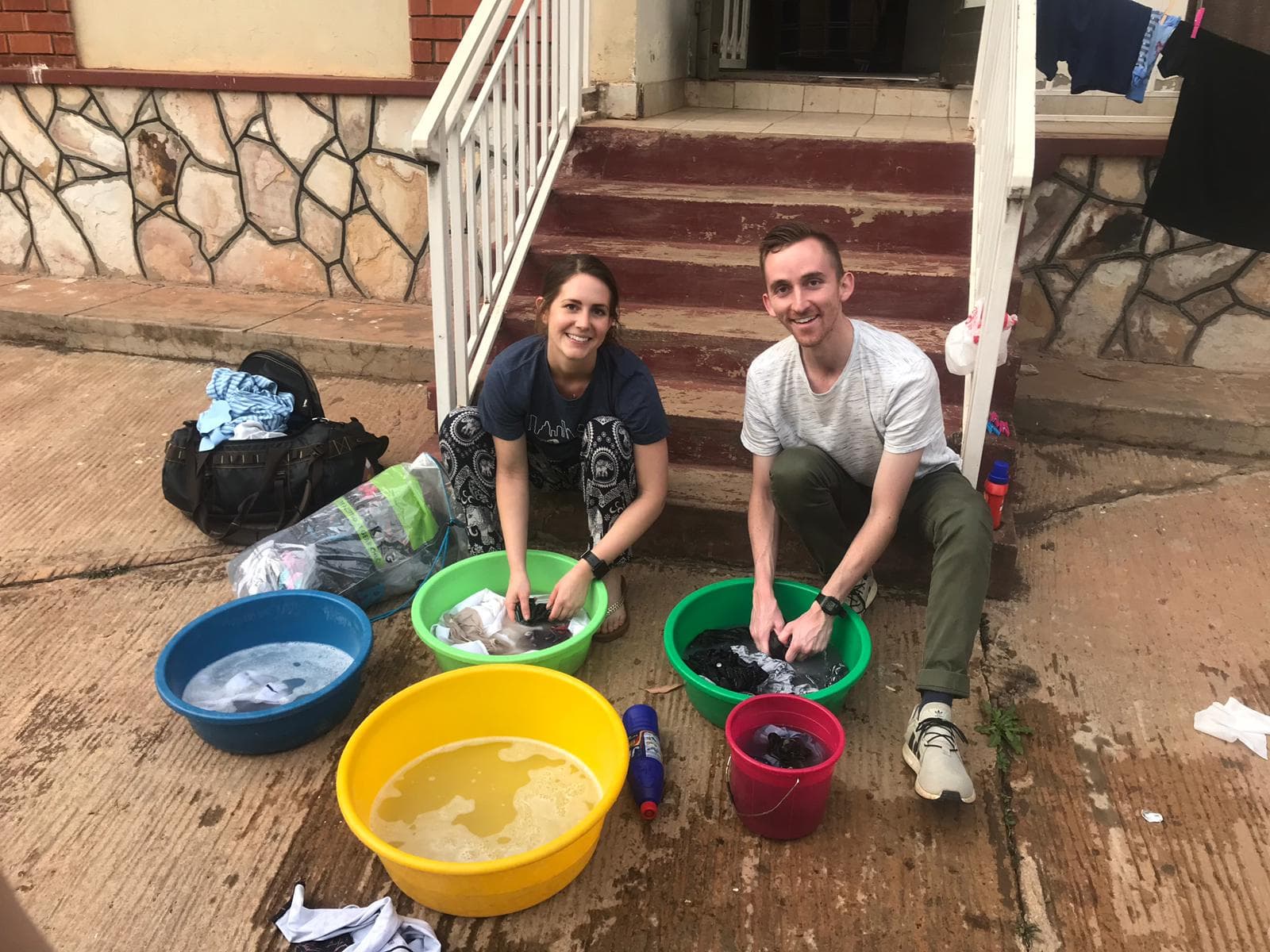
  • Laundry: It’s become more of an endeavor than we typically experience in the United States. There are no washers or dryers here! Not even laundromats! So all laundry must be done by hand. An additional obstacle to overcome when doing laundry in Kabale is the rain. The rainy season is starting here, and it’s been raining almost every single day. That obviously makes it difficult for our clothes to dry, so we’ll generally wait for a sunny afternoon to dedicate to laundry.
  • Feeling like a foreigner: As I jog or walk around, people will often yell, “Muzungu, how are you?!” Several people have slowed down their cars to do this as well, which is kind of awkward. There are very few foreigners in Kabale, which makes the CFHI students stick out like sore thumbs. When store owners or street vendors try to sell things to us, they’ll often remark, “Buy a chapatti for yourself!” or “You can buy some for him”, while pointing to someone else on the street. It’s evidently the impression of many Ugandans that foreigners are rich and are willing to give hand-outs. Kids and adults alike will often yell, “Muzungu, give me money!” We really can’t walk more than 30 yards without being addressed as Muzungu.
  • Electricity/Internet: The power goes out almost every day here, especially if it’s rainy. This means no charging my computer or phone, no internet for hours, and no hot water. Even when the internet is working, it’s nearly impossible to load a Google search, much less a video. This has been an educational nuisance and has been a consistent theme around Uganda, not just the apartments.
  • Poverty: Before arriving here, I had assumed people only shared images of the poorest of the poor in Africa – portraying sob stories – in hopes of eliciting emotion from Americans. I was really taken aback at how poor much of the population is here. Many people truly do live in shacks without floors. And it’s not just a small portion of the population, either. I continue to be amazed at how underdeveloped the nation is. Unfortunately , I think a large contributing factor is foreign aid. I’ve just begun reading Dead Aid: Why Aid is Not Working and How There is a Better Way for Africa by Dambia Moyo. I hope to delve more into this topic in the future.

Happy Valentine’s Day!

Happy belated Valentine’s Day! A lot has happened over the past few days. We made several field trips around the Kabale region after our time in clinic, discovered a location to buy scary movies in English, and found a store to buy delicious South African wine. A worm was also discovered in the tap water that still wiggled around the water bottle after being zapped with my Steripen. So I’m thinking my UV light water purifier might have to be temporarily retired.

On Wednesday, we visited a family farm to learn about sustainable agriculture (one of the students here is interested in that) which grew a plethora of different fruits, vegetables, herbs, and animals. Families in Uganda typically have small plots of land passed down from generations where they grow modest amounts of different organic pesticides made from peppers and ash, which was pretty neat.

Thursday, we tagged along with Kihefo’s monthly HIV outreach about an hour’s drive outside of Kabale. These outreaches are primarily geared toward HIV positive patients living in rural areas too far to walk from Kabale since many of them lack transportation. Here, patients’ viral loads and CD4 counts were tested and then the patients were counseled based on the results. These counselors looked at aspects of the patient’s life that could be affecting their illness, such as medication adherence, social support, and proper nutrition availability. Based on these factors, patients could be started on a new medication regimen or simply counseled the proper way to take their medications. I was really impressed with the clinic’s dedication to helping the rural communities remain adherent, as Kihefo’s employees will call patients who missed their appointment, and if there’s no answer, they’ll visit the patient’s home to check on them.

We ended the week on a high note by visiting one of the recipients of the Rabbit Program at her home. She was given 3 rabbits in 2015, and since then has been able to sell and eat many. She gave an example of eating rabbits for Christmas dinner and specifically selling 12 rabbits last time she went to the market. She continues to sleep with the rabbits in her house at night for fear that someone will steal them from their cages. She additionally uses the rabbit dung as fertilizer in her garden and uses their urine mixed with pepper as a natural pesticide.

Ugandan Maternal and Infant Health

I got to spend a significant amount of time in Kihefo’s maternal clinic today! Compared to American prenatal healthcare, Ugandan Healthcare is very similar (with the exception of the fetal stethoscopes, of course!) Pregnant women in Uganda receive all of the same checkups, vaccines, and lab work as American women. One difference that I found interesting, however, is that pregnant women here are recommended to take malaria prophylaxis at 20 weeks gestation until delivery.

We additionally discussed newborn care and vaccination schedules as well as procedures to care for an infant that’s been exposed to HIV. Newborns in Uganda receive the same vaccinations as the United States, but they additionally receive the tuberculosis vaccine (this is the one that forms a scar on the arm). All babies also receive a dose of Albendazole at 1 year of age for deworming purposes. In the United States, it’s not recommended that women with HIV breastfeed their infants for risk of transmission. However, women in Uganda are recommended to continue breastfeeding regardless of their status. We were shown a diagram of the benefits and risks of continuing to breastfeed versus formula feeding. Infants that are formula fed in Uganda are 4 times more likely to die from diarrhea or pneumonia than to contract HIV from their mother. This is likely due to different pathogens in Ugandan water as well as low availability of adequate formula.

This clinic was the nicest of all of the clinics that I’ve visited here so far and I definitely feel the most at home here – not to mention the newborns are so precious!hkhjkk.

A Safari Weekend

We arrived back to Kabale today from an adventurous safari weekend!

After a quick stop for food in Mbarara (one of the biggest cities in Uganda), we set out Friday to Lake Mburo National Park, where we were able to ride on top of our van for the best view of tons of animals. We saw some vervet monkeys, warthogs, olive baboons, crested cranes, topis, zebras, water bucks, cape buffaloes, and excitingly, giraffes (which are rare to see)! After driving through this park, we drove over to our campsite in Queen Elizabeth National Park. This was the nicest campsite I’ve ever visited, though. Each tent had lanterns inside of it, outlets to charge my phone, and a comfortable cot. At dinnertime, they set up outdoor tables with lanterns at each table and served a four-course meal with red wine. When I went to bed, I was lulled to sleep by the sound of hippos, frogs, and crickets. The sounds were so relaxing that I feel like I caught up on a week’s worth of sleep (I hadn’t been sleeping too well in Kampala). It was a little scary, though, because this campsite is still part of Queen Elizabeth National Park, so any animals that live there are able to walk through the campsite. Because of this, I had to have a guide walk me places at night in case of any animal encounters. This made using the restroom at night a little disconcerting.

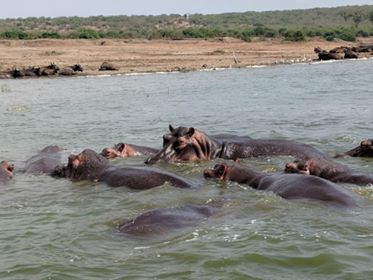
After our first night at the campsite, we departed on another safari drive, where we saw empalas, uganda kobs, and lions (2 lionesses and 2 male lions!) Poaching is still a problem here, so all of the lions had trackers on their necks for conservation purposes. In the afternoon, we went on a boat ride, where we saw tons of hippos, marabou storks, saddle beak storks, crocodiles, monitor lizards, cormorants, and as many as 23 elephants. The elephants were so amazing and cute because they had 3 tiny babies. After the boat ride, we had a quick stop at the equator and then headed home.

Sustainability and International Involvement

As a traveler and a member of the medical community, it’s important to consider the consequences of international involvement in local under-served communities. Personally, I’ve heard and read quite a bit of criticism about “pop up clinics” and church mission trips that arrive at a location for several days, help a small community for a short period of time, and then disappear. This essentially leaves the community more or less the same as before these mission trips arrived without making any sort of improvement in the local system. I’m proud that I chose to do my international rotation with Child Family Health International (CFHI) and Kihefo (Kigezi Healthcare Foundation), two programs that are dedicated to supporting change that is sustainable in nations that need it as well as educating the world about local difficulties. However, I am still skeptical of the longevity of the program without international involvement given its current status.


The rural outreach programs facilitated by Bridge to Health and Kihefo are designed to introduce healthcare into rural communities that previously did not have healthcare access. The outreaches always have follow-up and referrals to Kihefo clinics and local hospitals. This has been an excellent mechanism of changing the quality of health of the entire region of Kabale. The vision is to now create quantitative change and expand this improvement to all of Uganda.

Today, I spoke with Dr. Geoffrey Anguyo, the doctor who created Kihefo and facilitated the partnerships with CFHI and Bridge to Health. Currently, quite a bit of the clinical funding for the HIV, general, and maternal clinics are supplied to USAID (United States Aid for International Development). Kihefo received a grant 5 years ago that is able to sustain the efforts here on $200,000/year, however, renewal of this grant isn’t promised. Kihefo is currently working on making the program self-sustainable by establishing an insurance program and by assisting the economic health of the community via their Rabbit Program. The Rabbit Program gives rabbits to local families who are in need of protein and extra income, allowing these people to consume the rabbits and sell them at the market. The hope is that these extra funds will eventually lead to investment in insurance, allowing healthcare to become available to more individuals throughout Uganda. Yet I am skeptical that the rabbits are going to create enough revenue to sustain these clinics and insurance system. I m confident the Kihefo is making a real impact on the health of this region of Uganda. But I believe that some changes to the financial system still require improvement as the program is largely dependent on international funds.

Over the past several days, I’ve felt privileged to see the differences in prevalent diseases in this area versus home. Yesterday, in referral clinic, we encountered patients with tuberculosis, elephantiasis, and typhoid fever (glad I got my vaccine!). Even after having been here for just one week, its been a fascinating educational experience.

Day 2 in Kabale

As our first day of clinic, we set off this morning with the “Bridge to Health” organization to a rural outreach site about one hour away from Kabale. The site was set up in a primary school at roughly 7,000 ft elevation with beautiful hilly scenery lined with terraced farmland. I started off the day working in the maternal health clinic, which supplies pregnant women with vitamins, protein, and any necessary medications. The clinic recently brought in an ultrasound machine, which, with the promise to women in the area that they’d be able to see their baby, increased the number of mothers frequenting the clinic by ~175%. Here, I helped perform fetal measurements to provide these women with estimated delivery dates and detect any anomalies. This is probably the only ultrasound many of these women will have during their pregnancy. Unfortunately, we diagnosed a woman who previously thought that she was pregnant, with a molar pregnancy, which is not a viable pregnancy and puts her at risk for certain types of cancer. On a lighter note, however, I got to use a fetal stethoscope for the first time, something that we don’t use regularly in the United States!

In the afternoon, I worked with the on-site dentist and assisted with tooth extractions (something I never thought I’d be assisting with!) because many patients present with tooth decay beyond necessitating a filling. In another life, I’d make a pretty good dentist. We returned to the apartments at roughly 6 PM, tired and ready for a good meal (of squash, beans, and fried pineapple for dessert!) and shower. The latter of which was much needed; the tub was red afterward from all the dust that I’d collected from the day!

A Night in Rwanda

Uganda has been fascinating so far, but let’s talk about Rwanda first.

I flew in to Kigali, Rwanda last night. The air smelled like smoke – like a camp fire – immediately upon exiting the plane. It was nighttime, so I didn’t get to see the lush greenery around the airport, the colorful attire of the women walking down the street, or the hundreds of motorbike taxis driving down clean roadways until the next day. Cole, another student, and I were transported to Discover Rwanda Youth Hostel, where we met up with Mary Ella, another 4th year medical student like myself. She had the wonderful idea of heading to a fundraiser for spaying and neutering cats. After much apprehension (it was still nighttime, so I was wary) we headed to the event which had a DJ, tiki bar, a pool table, and many other foreigners. It was a very cool atmosphere and I got to try a local beer: Virunga Mist!

This morning, we headed to the Kigali Genocide Memorial. This was a museum commemorating people who were killed in the 1990s. Almost 1 million people were killed and 250,000 of those people were buried at this site. The museum was very well done and had suggestions of how to prevent genocide in the future. It also outlined all of the effort that the country has put into bringing society together since the time when the division between Hutu and Tutsis was brought to such an extreme to cause those terrible acts.

We had a quick bite to eat at the memorial and then headed to Uganda. It took about 3 hours to head across the border because Ugandans drive on the left side of the road and Rwandans drive on the right. However, in both countries, you are probably equally likely to find a car with a steering wheel on either side of the vehicle.

Upon arrival to Kabale, we were introduced to our apartments which are rather minimalistic (but have REALLY hot water ….Ahhhh…..). We explored around town a tiny bit, but then had dinner with the group of Canadians with “Bridge to Health”, an organization currently working with Kihefo. They’re a rather rowdy bunch that travels to rural under-served areas around the globe. For dinner, we had a Ugandan specialty: mashed plantains. It wasn’t very sweet like it sounds. It’s almost like mashed potatoes, but without the salt and butter.

The Journey Begins

Thanks for joining me! Here, I will be posting pictures, describing my experiences, and sharing my thoughts from East Africa starting February 2nd. I’ll be learning about the region’s approach to improving maternal and child health specifically by targeting malnutrition, anemia, HIV/AIDS, and malaria. As of now, I have my bags packed, vaccines injected, and PEP kit in tow – ready to delve into medicine in Kabale!

post