

As I move into my 4th week in Kabale, I’ve definitely gotten a taste of what it’s like to live in Uganda – at least from the perspective of a muzungu (foreigner). On a typical day, I’ll wake up early and go for a jog around a local golf course up the hill from the apartments. Lots of local people jog there too! I’ve made it up to 5 miles of mountainous jogging at a high elevation, which I think will serve me well when I go back to Texas. We’ll typically have breakfast of chapatti and eggs, a combination Ugandans call “Rolex”. It’s so delicious I’ll definitely be craving it when I get back home. Most of our meals are served by Patricia, who’s in charge of the Kihefo apartments. She also makes fabulous peanut butter, which I can bring home for some friends if they wish. 🙂 After breakfast, we’ll head down to clinic, go on an outreach, or spend some time with the medical students at Kabale Medical School and attend rounds at the local hospital. We’ll generally head back to the apartment for lunch (typically vegetarian with potatoes and vegetables) at around 1 PM and then either return to clinic in the afternoon or do laundry. We also attended yoga downtown one afternoon. This was actually an awesome, lighthearted experience where everyone high-fived each other at the beginning of class and laughed at themselves throughout the entire yoga session.
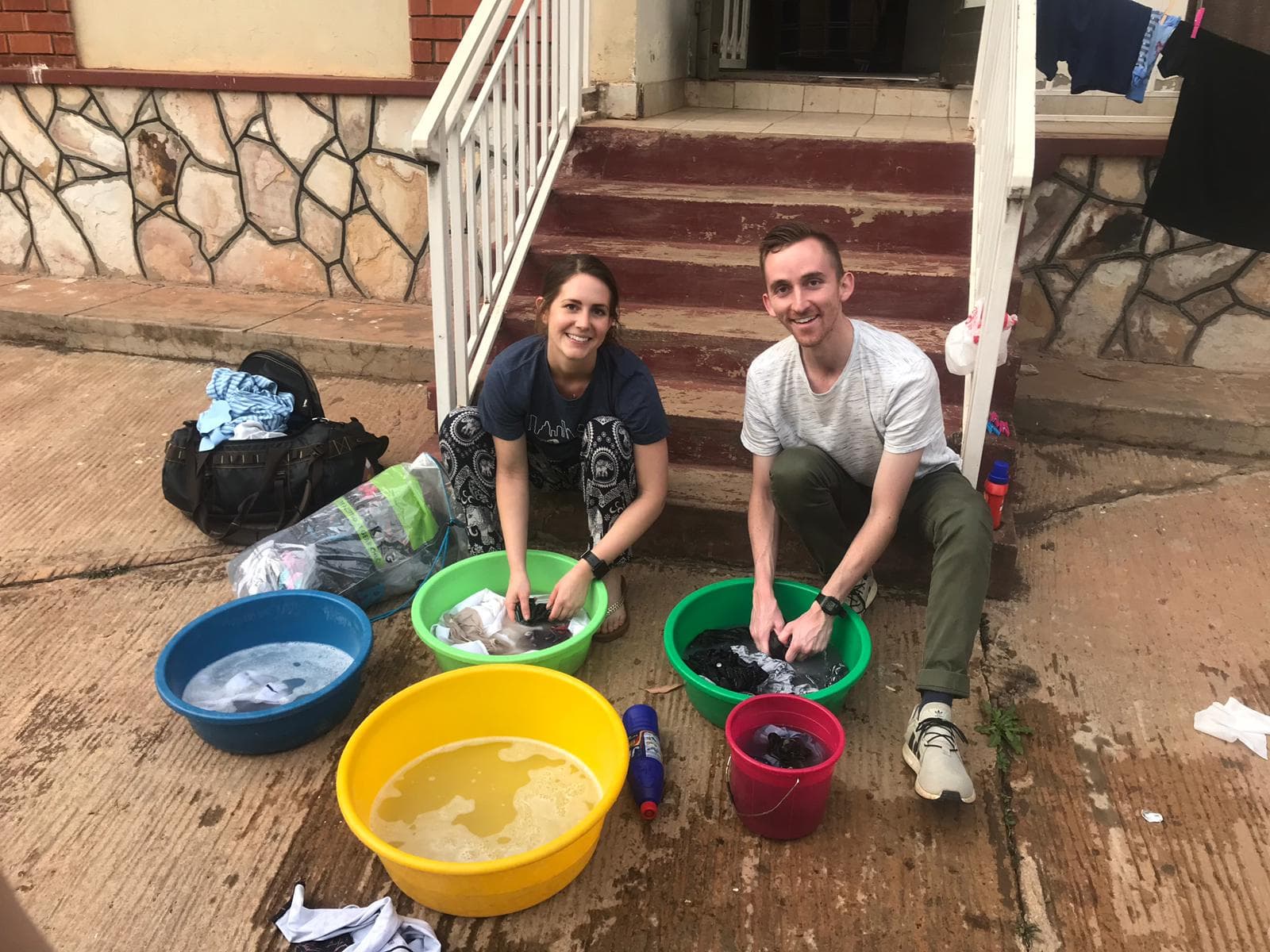
Doing laundry 
Apartment Courtyard
After the afternoon’s activities, I’ll typically put on some bug spray (I don’t want dengue or malaria) and head down to dinner at around 8 PM. We’ll typically have rice, beans, plantains (matooke), and some form of meat. After dinner, we’ll usually watch a movie or episode of Sex Education on my laptop before heading to bed (interesting side note: the episode where Mauve gets an abortion was removed. It’s illegal here!)
Some notable unexpected attributes that took some adjusting:
- Laundry: It’s become more of an endeavor than we typically experience in the United States. There are no washers or dryers here! Not even laundromats! So all laundry must be done by hand. An additional obstacle to overcome when doing laundry in Kabale is the rain. The rainy season is starting here, and it’s been raining almost every single day. That obviously makes it difficult for our clothes to dry, so we’ll generally wait for a sunny afternoon to dedicate to laundry.
- Feeling like a foreigner: As I jog or walk around, people will often yell, “Muzungu, how are you?!” Several people have slowed down their cars to do this as well, which is kind of awkward. There are very few foreigners in Kabale, which makes the CFHI students stick out like sore thumbs. When store owners or street vendors try to sell things to us, they’ll often remark, “Buy a chapatti for yourself!” or “You can buy some for him”, while pointing to someone else on the street. It’s evidently the impression of many Ugandans that foreigners are rich and are willing to give hand-outs. Kids and adults alike will often yell, “Muzungu, give me money!” We really can’t walk more than 30 yards without being addressed as Muzungu.
- Electricity/Internet: The power goes out almost every day here, especially if it’s rainy. This means no charging my computer or phone, no internet for hours, and no hot water. Even when the internet is working, it’s nearly impossible to load a Google search, much less a video. This has been an educational nuisance and has been a consistent theme around Uganda, not just the apartments.
- Poverty: Before arriving here, I had assumed people only shared images of the poorest of the poor in Africa – portraying sob stories – in hopes of eliciting emotion from Americans. I was really taken aback at how poor much of the population is here. Many people truly do live in shacks without floors. And it’s not just a small portion of the population, either. I continue to be amazed at how underdeveloped the nation is. Unfortunately , I think a large contributing factor is foreign aid. I’ve just begun reading Dead Aid: Why Aid is Not Working and How There is a Better Way for Africa by Dambia Moyo. I hope to delve more into this topic in the future.

CFHI students at Lake Bunyonyi 
The General Clinic 
The Nutrition Clinic




 Erika's Experience in Kabale, Uganda